


Description
Microsilica or Silica Fume
Alvand Giti Hegmataneh acts as a trusted regional supplier and broker, arranging fair terms and export shipments to national ports.
What Is Microsilica (Silica Fume)?
Microsilica, also known as silica fume, is a highly valuable supplementary material used in concrete, construction and advanced industrial applications.
Microsilica is an amorphous material with particles approximately 100 times finer than cement. This ultrafine structure significantly improves concrete density and performance.
Technical Specifications
- SiO₂: approximately 89.22% to above 95%
- Al₂O₃ : 1.20%
- Fe₂O₃ : 2.12%
- CaO : 1.87%
- MgO : 1.61%
- Na₂O : 0.556%
- K₂O : 1.056%
- LOI : 2.60%
Key Applications of Microsilica
1. High-Strength Concrete
Microsilica significantly increases concrete compressive strength and is used in high-rise buildings, bridges and heavy-duty structures.
2. Watertight Concrete
One of its key benefits is reduced concrete permeability, making it suitable for dams, water tanks and hydraulic structures.
3. Oil, Gas and Petrochemical Projects
Concrete containing microsilica offers substantially improved durability in corrosive and chemically aggressive environments.
4. Marine Structures
Microsilica is used in piers, breakwaters, ports and coastal structures to improve resistance to chlorides and seawater.
5. Tunneling and Metro Projects
In underground projects, microsilica helps reduce water penetration and increase concrete strength.
6. Precast Concrete Components
Precast-concrete manufacturers use microsilica to improve product quality, strength and service life.
Benefits of Using Microsilica
- Higher concrete compressive strength
- Improved abrasion resistance
- Reduced water permeability
- Greater durability in corrosive environments
- Improved sulfate resistance
- Reduced concrete cracking
- Longer structural service life
- Improved bond between concrete and reinforcing steel
Microsilica Export Market
Microsilica is an important export material for construction and infrastructure projects. Demand is driven by ports, power plants, oil and gas facilities and other durable-concrete applications across the Gulf region, Iraq, Türkiye, Central Asia, India and selected European markets.
Packaging
Alvand Giti Hegmataneh supplies microsilica in multiple packaging formats tailored to customer and export requirements:
- 25 kg bags
- 40 kg bags
- 50 kg bags
- 1-ton jumbo bags
- Custom export packaging
Safety and Storage
Store microsilica in a dry, well-ventilated area. Use appropriate personal protective equipment during handling and application.
Why Alvand Giti Hegmataneh?
Alvand Giti Hegmataneh supplies quality-controlled mineral products with reliable packaging and logistics for domestic and export markets.
We believe lasting success is created when every party benefits from the cooperation. Integrity, trust and reliability are the foundations of our business, and we wish sustainable growth and prosperity for all customers and partners.
Alvand Giti Hegmataneh — Business Built on Integrity, Trust and Reliability

Main Applications and Use Conditions
Effects of Microsilica in Concrete
1. Increased Cohesion and Reduced Slump: Microsilica increases mixture cohesion and can reduce measured slump, so water-reducing admixtures are generally recommended. Although slump may decrease, vibration can improve mould filling and practical workability; therefore, slump alone may not fully represent the workability of microsilica concrete.
2. Reduced Bleeding and Segregation: Ultrafine microsilica particles reduce bleeding and segregation, improving concrete cohesiveness.
3. Extended Setting Time: This effect can be beneficial during hot-weather concreting.
Recommended Microsilica Dosage in Concrete
Microsilica dosage depends on the concrete performance target and mix design. A typical theoretical range is approximately 3–15% of cement mass, with a corresponding adjustment to cement content. Laboratory and field trials are required to confirm the optimum dosage.
• Watertight Concrete: A typical dosage range is 3–10% of cement mass, subject to the mix design and required durability. Around 7% is often used as an initial trial value.
• High-Strength Concrete: Typical trial dosages range from 5–17% of cement mass. Around 12% may be used as a starting point, subject to testing.
For special performance requirements, laboratory and site trials must determine the precise microsilica dosage. Excessive replacement levels may reduce strength in some mixtures.
Using Microsilica as a Gel or Slurry
Powdered microsilica offers significant concrete-performance benefits, but its low bulk density and very high specific surface can create handling, environmental and dosing challenges. Gel, slurry or formulated microsilica products may improve dispersion and site handling. can create handling and environmental challenges because of the material’s low bulk density and very high specific surface. Gel, slurry or formulated products can improve dispersion and site handling.
Production Process and Properties of Microsilica
Microsilica is recovered from electric-arc furnace exhaust during silicon metal and ferrosilicon production. SiO₂ vapor cools and condenses into ultrafine spherical amorphous particles collected by bag filters. is reduced at approximately 2,000°C, generating SiO₂ vapor that cools and condenses into ultrafine spherical amorphous silica particles collected by bag filters.amorphous solidThe vapor oxidizes and condenses into ultrafine amorphous silica particles recovered by bag filters and compared with ordinary Portland cement and fly ash.
A representative microsilica sample may contain 20% of particles below 0.05 μm, 70% below 0.10 μm, 95% below 0.20 μm and 99% below 0.50 μm. The dominant chemical component is typically silica, while exact composition, surface area and bulk density depend on the production source and test report.
Microsilica particles are substantially finer than Portland cement and fly ash, which contributes to high pozzolanic reactivity. Appropriate superplasticizers are normally used to control water demand. The product may be supplied as powder or slurry to improve handling and reduce airborne dust. is normally used to control water demand. Microsilica is supplied in powder and slurry forms; slurry can reduce airborne dust and improve handling. Typical cement-replacement levels are approximately 5–15%, subject to mix-design testing. high-performance concrete. Typical cement-replacement levels are approximately 5–15%, subject to mix-design testing.
Microsilica improves concrete through particle packing and pozzolanic reaction. Its ultrafine particles fill spaces between cement grains, creating a denser microstructure and supporting higher compressive strength and lower permeability. Microsilica particles fill spaces between cement grains, producing a denser microstructure and supporting higher compressive strength. resulting in higher concrete strength.
Microsilica Production Process
Microsilica is recovered as a silica-rich by-product during silicon and ferrosilicon production. The principal production stages are outlined below:
Silicate Raw-Material ProcessingSilicate materials such as quartz are crushed and milled to the required feed size.
Furnace ProductionIn furnace production, silica-rich feed and carbon are processed at high temperature in electric-arc furnaces during silicon or ferrosilicon production.
SeparationSilica-rich fumes are separated from furnace exhaust using filtration and dust-collection systems. The recovered particles are approximately one hundredth the size of typical cement particles.
High-Temperature ReactionAt approximately 1,800–2,000°C, silica forms vapor that subsequently oxidizes and condenses.
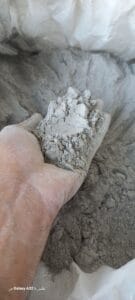
Collection and CoolingThe condensed material is cooled and collected as a fine grey to dark-grey powder using controlled gas-handling and filtration systems.
FiltrationThe cooled ultrafine powder is filtered to remove oversized particles and ensure product cleanliness.
Packaging and StorageClean, dry microsilica is packed in bags, jumbo bags or other suitable formats for safe storage and shipment.
The final product is a grey to dark-grey silica-rich powder recovered, cooled and packaged from furnace exhaust.
Available Forms of Microsilica
Microsilica is supplied in undensified, densified, pelletized and slurry forms. Selection depends on handling, transport and end-use requirements.
1. Undensified Microsilica: Typical bulk density is approximately 200–300 kg/m³. Its low density can make transport and concrete dosing more challenging.
2. Densified Microsilica: Bulk density is typically above 500 kg/m³, improving handling and reducing transport cost compared with undensified powder.
3. Pelletized Microsilica: Produced as approximately 0.7–1 mm pellets with bulk density above 600 kg/m³. This form is generally not intended for direct use in concrete mixes.
4. Microsilica Slurry: Produced by mixing undensified microsilica with water. Slurry form can improve particle dispersion and mixture uniformity.
Microsilica Pozzolanic Reaction
The pozzolanic reaction is defined as follows:
Pozzolan + Calcium Hydroxide + Water → Secondary Calcium Silicate Hydrate (C–S–H)
Microsilica is a highly reactive pozzolan. It reacts with calcium hydroxide and water to form additional C–S–H gel, filling capillary pores, reducing permeability and improving concrete durability and resistance to aggressive exposure. fill capillary pores. This reduces concrete porosity and permeability, limits harmful secondary reactions and improves durability in high-performance concrete exposed to chlorides and aggressive environments.
For further information on technical specifications, standards and the use of microsilica in high-strength concrete, consult recognized international references.
– ASTM C1240 Standard Specification for Silica Fume Used in Cementitious Mixtures
– Silica Fume Association
– Wikipedia – Silica Fume
You may also explore the following mineral products supplied by Alvand Giti Hegmataneh:
• • Premium Silica, 99% Purity
• • Granulated Silica, 0.2–0.8 mm
• Lump Silica
• Micronized Calcium Carbonate
• Micronized Dolomite
• Micronized Sodium Feldspar
Microsilica (Silica Fume)
Microsilica, also known as Silica Fume, is one of the most valuable mineral products used in modern construction and high-performance concrete applications. Due to its extremely fine particle size and high silicon dioxide content, Microsilica significantly improves concrete strength, durability, density, and water resistance.
Microsilica is an amorphous silica material with particles approximately 100 times finer than cement particles. It fills microscopic voids within the concrete matrix and enhances the pozzolanic reaction, resulting in superior mechanical and durability properties.
Chemical Analysis
- SiO₂ : 89.22% (up to 95%+ available)
- Al₂O₃ : 1.20%
- Fe₂O₃ : 2.12%
- CaO : 1.87%
- MgO : 1.61%
- Na₂O : 0.556%
- K₂O : 1.056%
- LOI : 2.60%
Main Applications
- High Strength Concrete (HSC)
- Ultra High Performance Concrete (UHPC)
- Marine Structures
- Dams and Water Reservoirs
- Tunnels and Underground Projects
- Oil & Gas Facilities
- Petrochemical Plants
- Precast Concrete Products
- Industrial Flooring
- Infrastructure Projects
Key Advantages
- Increased compressive strength
- Reduced permeability
- Improved durability
- Enhanced abrasion resistance
- Better chemical resistance
- Reduced chloride penetration
- Extended service life of structures
- Improved bond strength
Export Supply
Alvand Giti Hegmataneh supplies Microsilica for domestic and international markets with flexible packaging options including small bags, bulk bags, and export-grade jumbo bags.
Packaging
- 25 kg bags
- 40 kg bags
- 50 kg bags
- 1 MT Jumbo Bags
- Customized export packaging
Our Philosophy
At Alvand Giti Hegmataneh, we believe the world is built on abundance. Honesty, trust, and reliability are the foundation of every successful business relationship. Our mission is to deliver high-quality mineral products while creating long-term value for customers worldwide.
Alvand Giti Hegmataneh – Trade Based on Honesty, Trust and Confidence.




Reviews
There are no reviews yet.